
Do You Need a Rolling Road to Remap a Car?
We get asked this a lot, usually phrased as a challenge: how can you remap properly without a rolling road? It is a fair question.
What a rolling road does
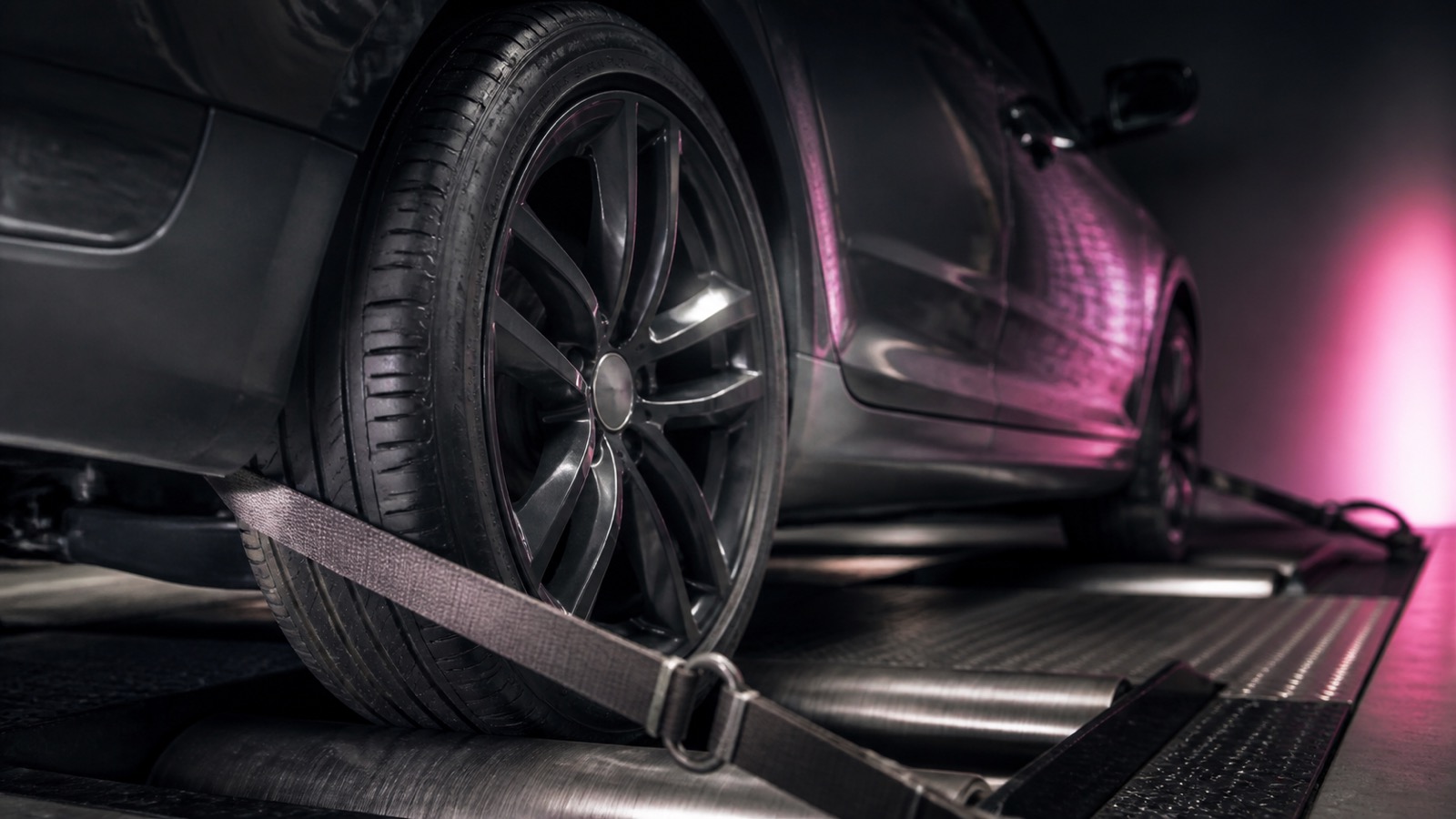
A rolling road, or chassis dynamometer, holds the vehicle still with its driven wheels on rollers so the engine can be run under load while measurements are taken. Its job is measurement. It produces a power and torque curve and lets you see what changed.
That is useful. What it is not is the thing that writes your map.
Measuring and calibrating are different jobs
A dyno verifies. Calibration creates. A rolling road will show you a number, but it will not tell you which fuelling table to adjust. The skill sits in the file, in knowing that specific engine and ECU, and in reading live data properly.
For a Stage 1 map on standard hardware, the engine, turbo, injectors and ECU are all known quantities in a well-understood configuration. The calibration is developed for that platform and checked against live data from your actual vehicle as it runs: fuelling, boost, timing, intake temperatures, knock behaviour. That is real measurement, taken from your car.
When a rolling road genuinely helps
It earns its place when you are running significantly modified hardware, such as a different turbo, uprated fuelling or major intake and exhaust changes. There the combination is unique and there is no known-good starting point.
It is also worth having if you want a documented before-and-after figure on paper, if you are chasing the last few percent at the top of a build, or if you are diagnosing an odd problem that only shows up under sustained load.
If you are doing a serious Stage 3 build, dyno time is a sensible part of the process and we will say so.
| Situation | Rolling road worth it? |
|---|---|
| Stage 1 on a standard car | Not needed |
| Heavily modified build | Genuinely useful |
| Unknown or mixed hardware | Useful |
| Wanting a printed figure | That is what it is for |
| Diagnosing a running fault | Live data does that better |
What it does not do
A rolling road does not turn a bad map into a good one. A generic file flashed onto a car on a dyno is still a generic file, you have just paid to watch it be measured. Equally, a carefully written map checked against live data on the road is not deficient because nobody printed a graph.
Dyno figures are not absolute either. Different dyno types, correction factors, ambient conditions and strapping methods all move the numbers, so two rolling roads can give noticeably different results for the same car on the same day. That is why comparing figures between sites tells you very little.
How we work
We are a mobile service. We come to your home, work or yard, read your ECU, write a map developed for that exact engine and ECU variant, check it against live data from your vehicle, and road test it. For the Stage 1 and economy work that makes up most road-car tuning, that is the right process, and it costs you no time off the road.
If your project genuinely needs dyno development, we will tell you rather than take the job.
The short version
For a standard road car having a Stage 1 or economy map, you do not need a rolling road. For a heavily modified build, it becomes genuinely valuable.
Anyone telling you a dyno is always essential is usually selling dyno time. Anyone telling you it is never useful is overstating it too. Tell us about your vehicle and we will let you know which category it falls into.
Frequently asked
Can you remap a car without a rolling road?
Yes, for standard vehicles. A rolling road measures, it does not write the map. The calibration comes from knowing that specific engine and ECU, checked against live data from your own vehicle and confirmed by road testing.
When is a rolling road actually necessary?
When the hardware combination is unique, such as a changed turbo, uprated fuelling or major intake and exhaust work. Also when you want a documented power figure, or are chasing the last few percent on a serious build.
Are dyno power figures accurate?
They are useful as a comparison on the same dyno on the same day. They are not absolute. Dyno type, correction factors, ambient conditions and how the car is strapped down all affect the reading, so comparing figures between sites tells you little.
Is mobile remapping lower quality than workshop remapping?
Not for the work it suits. The file, the tools and the checks are the same, the difference is that we come to you. What matters is whether the map is written for your exact vehicle and properly tested.
Which manufacturer do you drive?
Every map is written for your exact make, model and engine. Pick yours to see the models we work on most.
Ready to see what your car could gain?
Call 01934 245246 · info@carbontuning.co.uk